Today we on the construction team went to a house under construction to help with, you guessed it, mixing concrete. Since cement boot camp yesterday, now we’re experts. Except they think we do it wrong. We’re learning, I guess.
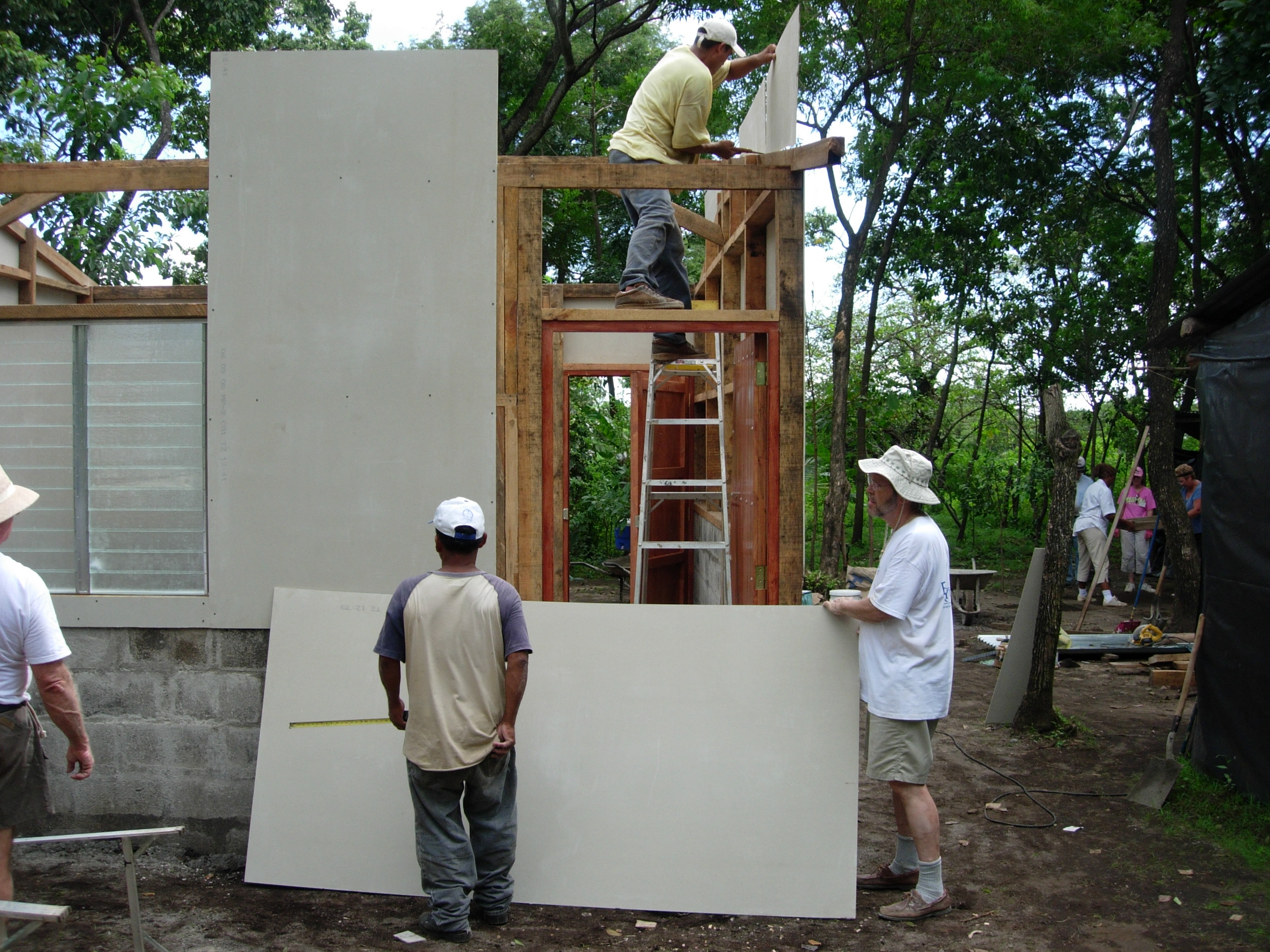
Off we drive north of Leon to a house you could never find if you tried. From the road we drove through two gates, across a field with no visible tire marks from previous vehicles, then walked under a barbed-wire fence and down a dirt path to the construction site. No street signs, no house numbers. Just four poles in the ground with heavy duty Glad bags as the walls. The new one room house for this woman was absolutely beautiful compared to what she had. Previously crews had built up concrete block walls to about waist height and framed the start of the roof. We mixed up concrete for the floor and attached some cardboard as walls. Okay, it wasn’t cardboard, but it looked like 1/2″ concrete drywall. We’ll paint it tomorrow and I guess it is weather-resistant. Things are very different from what we would do at home, but in the practical reality of life here, the improvements we’re making are hundreds of times better than what we found. This house could actually withstand wind. Her garbage sack house would blow away in no time.
Jim Bowman helping the locals attach a wall panel
So a few of the team decided to tease me today along with the construction foreman because of a slight incident from yesterday. Hector is learning English when he can, which is during his interactions with English speakers. My Spanish is enough to get directions and order food. Well, maybe a little better, but I have a long way to go. Well, Hector and I were talking about the weather, concrete and construction things as best we could. He was inquiring about the price for the bags of cement we were using, and we guessed they were about the same price. But I was trying to say that in the US, concrete comes in a cement mixer instead of us mixing it by hand. So, I say to him, “Pero, en los estados unidos, concreto vene en una gigante camiseta.” All the local construction guys around start to laugh and he says to me, “Andres, camiseta is t-shirt!” What I meant to say was “camioneta” which means truck. Oh well, at least now I know what camioneta means and so does my entire team. It could have been worse, I could have said something inappropriate about his mother.
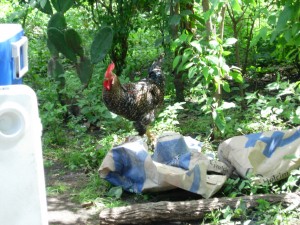
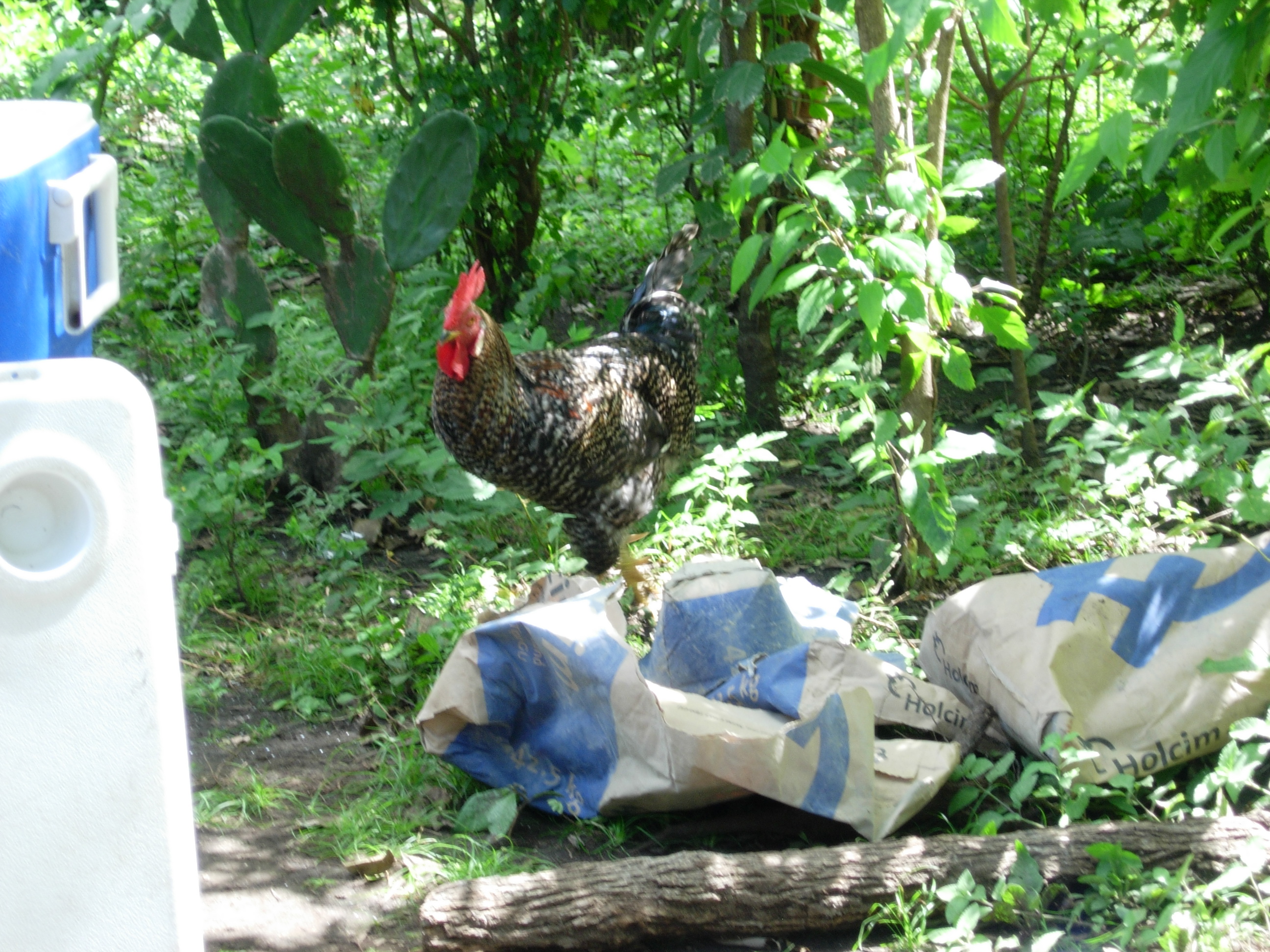
A rooster walks around the site showing us who was really el jefe
In the afternoon, as things were winding down, I took the opportunity to take a few pictures and look around the site a little. This family had a few chickens and a pig walking around while we were working. But one thing I notices was that the family of the woman we were helping we just sitting around watching us work. I asked our translator if building this house was going to cause dissention in the extended family because there weren’t plans to build for anyone else. He said that there would probably be a lot of gossip and that it might not be pretty.
One of the things we’ve been hit by is that it is hard to choose who to help, and sometimes it is very arbitrary. We came here with pockets full of money and the first thing we had to do once we got out of the airport was shoo away small children begging for money. In environments like this, if you just pull out cash and start passing it out, you’ll get mobbed, and if you don’t give everyone the same, you may get hurt. There is so much need here, and never enough resources. It can be difficult to say no to someone you can ‘help’ but at the same time, are we enabling the begging? By helping this organization, we know that there is follow-up care and accountability. The leaders are wise and try to choose well, because it is impossible to help everyone. Saying no has been difficult. But sometimes by saying no we are actually helping. Just like at home when I help with meals at the homeless shelter and don’t help street beggars, sometimes the correct answer is, “I’m sorry, I can’t help you.” I just pray that we’re making wise decisions with who is who.